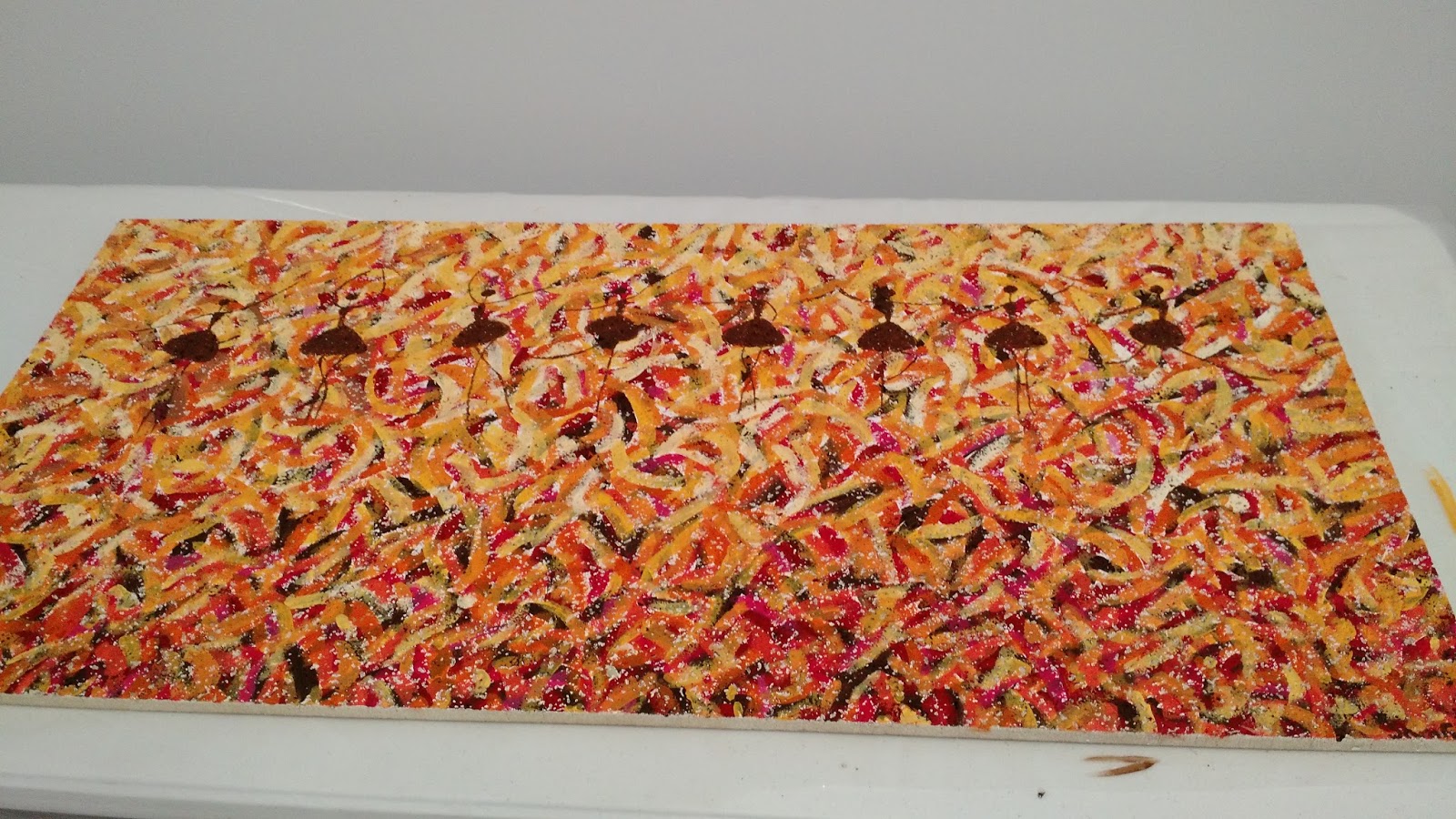
On Art Day, we also had the opportunity to invite our advanced students to paint ceiling tiles for our headquarters building. Selected students from all levels of art were invited to paint the tiles and I am so impressed with their work! It was a really great day and fun to get both groups together for a day of artmaking.
Showing posts with label reluctant learners. Show all posts
Friday, May 6, 2016
Art Day: Intervention and Supplemental Opportunities
Last year, I had a crazy idea to meet one of my failing seniors in the library and work with him to complete the art projects he needed to pass and graduate. It worked! He successfully completed art right in front of my eyes. At that point I thought it would be great to offer this opportunity to more students. Lots of organizing and paperwork later, Art Day was born!
Yesterday, myself and 3 other teachers on my team, met at our school headquarters to facilitate a day of making art with failing students, many of them seniors. We each invited our struggling students and set up a room with 5 different stations for various projects in Art 1. We provided lunch, materials, and instruction. The result was awesome! The students really enjoyed working side by side and creating artwork. They are also now all passing and I am hoping Art Day will give them the confidence to continue working on their own.
On Art Day, we also had the opportunity to invite our advanced students to paint ceiling tiles for our headquarters building. Selected students from all levels of art were invited to paint the tiles and I am so impressed with their work! It was a really great day and fun to get both groups together for a day of artmaking.
Wednesday, April 13, 2016
Aiming for Higher Achievement
Over the past 5 years, I have written about my passing rate, reluctant learners, and working to increase the number of students successfully passing my Art 1 class to earn their fine art credit. But this year, I have grown tired of pulling teeth for my students to achieve the minimum. I am tired of begging for students to do work when I really want them to learn more than the minimum, try more than the minimum, and achieve more than the minimum. So, I wrote a goal on my whiteboard that hangs in my office this year, "Aim for A's, not just passing."
Until this semester, I believe I have been aiming too low at times for my students. So, this semester I have been working through some new strategies to increased achievement, rather than simply pass rate. And, it is working!
Here is what I have been trying:
Until this semester, I believe I have been aiming too low at times for my students. So, this semester I have been working through some new strategies to increased achievement, rather than simply pass rate. And, it is working!
Here is what I have been trying:
| Page 1 of the catch-up packet |
- Emailing all students who are missing assignments from the previous week every Monday morning with helpful strategies and scaffolding worksheets when applicable
- Increasing my phone calls by an average of 20 more reaching out calls per week, encouraging students to complete their work and addressing any questions
- Freeing myself of the "passing packet" and replacing it with a catch-up packet (click here to download) which includes more weeks of art projects, better directions, and is marketed towards improving a student's grade with no promises of receiving a passing grade.
Surprisingly, students seem to gravitate towards the catch-up packet far more than they ever did the passing packet, and it doubles as an intervention tool for students with an IEP or who simply prefer to work in a worksheet-style method. It works well as a way to help students who were added late to the course get caught up as well.
We are only halfway through the semester and already I am seeing an overall 10% shift to higher achievement (letter grades) than at this time last semester!
With 2% more A's and 8% more C's (and 8% less D's) I am over the moon. Go students go!
Thursday, December 11, 2014
Whatever it Takes
I have hit a little bit of a static time within my classroom these past few months. I haven't had many new teaching strategies I've been trying as I have been focusing much of my time leading my colleagues in completing the Ohio 5-Step Process as Teacher Based Teams. Leadership is also the focus of the 4th year of the Ohio Resident Educator Program which I have been working on as well. It feels refreshing that this week I have finally been able to focus more on helping individual students.
As I have said before, one of the strengths of an online environment is being about to work with students on an individual basis, in fact it is much more rare for me to work with students as a group. This week I have been focusing on engaging students who have not been successful on their own as of yet. Previous to this week I sent out letters, made calls to parents and students, and sent countless emails to attempt to engage these reluctant learners.
This week, I tried putting my money where my mouth is so to speak and invited these struggling students to one-on-one synchronous sessions. For these sessions I prepared slides that walk students through each step of every project in my course. I invited students to attend via phone calls and individual emails (with their names in the subject line!). Once a student entered the classroom I would direct the students through each project step-by-step using the slides on the board and demonstrating each step over the my document camera. These sessions did get pretty lengthy but students were willing to stay, with the goal of passing the course at the end of our time working together. I'll be honest, until this week I have had lackluster attendance in my synchronous sessions, but these catch up interventions are working their magic on some of my most difficult to reach students.
As I have said before, one of the strengths of an online environment is being about to work with students on an individual basis, in fact it is much more rare for me to work with students as a group. This week I have been focusing on engaging students who have not been successful on their own as of yet. Previous to this week I sent out letters, made calls to parents and students, and sent countless emails to attempt to engage these reluctant learners.
This week, I tried putting my money where my mouth is so to speak and invited these struggling students to one-on-one synchronous sessions. For these sessions I prepared slides that walk students through each step of every project in my course. I invited students to attend via phone calls and individual emails (with their names in the subject line!). Once a student entered the classroom I would direct the students through each project step-by-step using the slides on the board and demonstrating each step over the my document camera. These sessions did get pretty lengthy but students were willing to stay, with the goal of passing the course at the end of our time working together. I'll be honest, until this week I have had lackluster attendance in my synchronous sessions, but these catch up interventions are working their magic on some of my most difficult to reach students.
Wednesday, January 22, 2014
Success!
I have concluded my semester 1 with my highest ever passing rate as a teacher. 74% of my students passed Art 1! I believe the passing packet and my other efforts to engage students during the last 2 weeks of the semester really made the difference this time.
The method I used:
1. Send out mid-term grades for the 2nd quarter.
2. Send the passing packet to all failing students (see previous entry)
3. 2 weeks from the end of the semester, send each failing student an email with the subject line, "Name, you are X assignments from passing!" outlining some assignment suggestions to get them to a passing grade
4. 2 weeks from the end of the semester, call each failing student to tell them about the email
5. Last week of the semester, call each failing student who has not completed the work assigned in the email and remind them of the amount of time they have left to complete it
6. Provide an extension of the weekend to complete all missing work
With this method I was able to engage my reluctant learners so they could succeed and earn their required fine art credit. I'll continue to use this method next semester and hope for similar results.
The method I used:
1. Send out mid-term grades for the 2nd quarter.
2. Send the passing packet to all failing students (see previous entry)
3. 2 weeks from the end of the semester, send each failing student an email with the subject line, "Name, you are X assignments from passing!" outlining some assignment suggestions to get them to a passing grade
4. 2 weeks from the end of the semester, call each failing student to tell them about the email
5. Last week of the semester, call each failing student who has not completed the work assigned in the email and remind them of the amount of time they have left to complete it
6. Provide an extension of the weekend to complete all missing work
With this method I was able to engage my reluctant learners so they could succeed and earn their required fine art credit. I'll continue to use this method next semester and hope for similar results.
Thursday, January 2, 2014
Getting Silly and the Passing Packet
As we approach the end of semester 1 for 2013-2014, there has been a big focus in my department around pass rates. This school year is the first time in Ohio that a fine arts credit is required for all students to graduate. As an art teacher, I think this is fantastic news! However, it has been a challenge this year with an increased population of students being placed in my Art 1 class who do not want to be there and also might not know about the new requirement. Engagement is always a challenge in an online environment, especially when students are not interested in the content. I also often find that students have high anxiety about drawing and art in general. There are many ways I work to soften and break down these barriers of learning in my class through video, step-by-step instructions, live lessons, demonstrations, and working with students one-on-one. However, for the students who aren't looking at my lesson pages at all, it is a bit more difficult to help them. Thus, I have begun to get a little more creative with my approach to reach reluctant learners, and even a little silly.
I have created a document called the "Passing Packet" which is a word document that includes all of the lesson materials and project instructions for all of the projects students are required to do to pass. I have broken it down to make it as simple as possible. Complete the packet, earn your credit. Now, I do not distribute this information to students who are already engaging and being successful. I only give it to students who have not engaged in the content throughout the first 15 weeks of school. It is my hope that I can engage even the most reluctant learners to engage and pass Art 1. I also worked with my co-teacher Dana to create a fun video that helps remind students we have a sense of humor, and even though they might be frustrated, we are here do everything we can to help.
Wednesday, June 5, 2013
Motivation Frustration
It is the last week of school this week and I am finding myself wishing I was a motivation super hero for my students. With a current pass rate for the semester of 58%, I am scrambling to motivate 42% of my learners to pass my class. In online learning, student motivation is the biggest challenge I face. If a student fails my art course, it is solely because they have not completed enough assignments to pass the course. It is easy to get sucked into my own frustration this week rather than continue to do everything I can to let them know it is not too late and I have not given up on them.
Here are the methods I am focusing on this week:
- Passing instructions: I started my mission to save my failing students with an email that listed all the assignments they could choose from and how many they need to do in order to pass my class. Sometimes it is a little disappointing to know students want to do the bare minimum to earn their credit, but as teachers we all know this is true sometimes and it is easier to motivate a student when they feel the goal is within their reach.
- Phone calls: Reaching out to students over the phone is sometimes the make it or break it in their motivation. It's easy to forget they are more than just a overlooked name in my classroom if I do not reach out to them. As I have spoken with my students who are failing this week, many of them have been thankful for my call and already working on the assignments they need to submit.
- Personal emails: Not all of my students answer me when I call, and sometimes their numbers do not work. At this point I turn to emails, but they still need to be personal. Now, instead of many options for passing I have moved to specific assignments for each student to complete that will push them to a passing grade. I look at the number of assignments they need, pick the ones I want them to do, and send out the message with a read receipt. I have found that for some students, a specific list is more motivational than many options. To remind students that these emails are personal I put in the subject line "Passing instructions for (student name)" or if they are only one assignment away from passing it will say "(student name) you are ONE assignment from passing".
- Offering extensions when possible: Deadlines are important as they give procrastinating students a reminder that they really need to get it done. However, when possible, offering extra time gives students the extra push they need to know that you care about their success enough to grant extra time. I never offer this extra time until the very end so as to not promote more procrastination.
Monday, February 11, 2013
Making Students Proud
When I speak to many of my students for the first time, they are nervous about taking an art class. They feel they're bad at drawing and that I am going to judge their work on standards set by other students who are "much better" than they are. One of my missions as an art teacher is to help my students become more confident in their work. When they feel confident, they work harder on their drawings which sometimes even translates to work in their other classes. As a student who struggled in the beginning of high school, I didn't really believe I could achieve good grades until one of my teachers showed me I could by helping me earn my first A. After that, I worked very hard to keep an average of A's and B's for the rest of high school and got into my first choice of colleges.
I see many of my students feeling as though they can't succeed and I am striving to find ways to help them feel confident in what they do so they can use this confidence in all aspects of their learning. A couple ways I have done this in my classroom are giving detailed feedback and posting their work for others to see.
When I give students feedback, I make sure it is detailed and includes both positive comments and ways for them to improve (growth-producing feedback!). Because I don't always have the opportunity to talk to every student about each project, my written feedback is where they get this information.
Some examples of feedback:
"-------, this is a great start. It looks like you used linear perspective correctly here to create a complex 3-dimensional house. However, your drawing is very sketch-like and looks unfinished. Please spend some more time on this drawing to complete it for an A. (Think about what you can add to the setting, darken up lines, straighten up lines)."
"------, your use of detail is fantastic in this drawing and your house looks 3-dimensional. However, it does not look like you used a vanishing point as your guide. Remember, the vanishing point is always on the horizon line. Please review my corrections and submit a quick sketch showing me you understand how to use a vanishing point in your drawing for an A." For this feedback I also gave the student visual feedback as well to help him improve (see below)
As an online teacher I don't have a bulletin board to display student work so instead I use digital tools. In the past I have used simple HTML pages to display images of student work but I have found a new, exciting tool this year. I use a website called Animoto to create videos of student artwork. As a teacher you can get a free education account if you are a teacher which gives you more video themes to pick from and does not limit the number of videos you can create. This tool makes viewing their artwork and classmates' work fun and engaging and I have had wonderful feedback so far from students and administrators.
I see many of my students feeling as though they can't succeed and I am striving to find ways to help them feel confident in what they do so they can use this confidence in all aspects of their learning. A couple ways I have done this in my classroom are giving detailed feedback and posting their work for others to see.
When I give students feedback, I make sure it is detailed and includes both positive comments and ways for them to improve (growth-producing feedback!). Because I don't always have the opportunity to talk to every student about each project, my written feedback is where they get this information.
Some examples of feedback:
"-------, this is a great start. It looks like you used linear perspective correctly here to create a complex 3-dimensional house. However, your drawing is very sketch-like and looks unfinished. Please spend some more time on this drawing to complete it for an A. (Think about what you can add to the setting, darken up lines, straighten up lines)."
"------, your use of detail is fantastic in this drawing and your house looks 3-dimensional. However, it does not look like you used a vanishing point as your guide. Remember, the vanishing point is always on the horizon line. Please review my corrections and submit a quick sketch showing me you understand how to use a vanishing point in your drawing for an A." For this feedback I also gave the student visual feedback as well to help him improve (see below)
As an online teacher I don't have a bulletin board to display student work so instead I use digital tools. In the past I have used simple HTML pages to display images of student work but I have found a new, exciting tool this year. I use a website called Animoto to create videos of student artwork. As a teacher you can get a free education account if you are a teacher which gives you more video themes to pick from and does not limit the number of videos you can create. This tool makes viewing their artwork and classmates' work fun and engaging and I have had wonderful feedback so far from students and administrators.
Subscribe to:
Posts (Atom)